What Really Makes Harvard A+ Students Different? (Hint: It's Not What You Think)

A Learning Science Series — Part 1
Hey there, fellow learners!
Whether you're a parent helping your kid crush it in school, a college student pulling late nights in the library, or someone who's been out of school for years but still believes in the power of lifelong learning — this one's for you.
Let me start with a question that might surprise you:
What separates Harvard's top students from everyone else?
Is it a sky-high IQ? A photographic memory? Some kind of genetic advantage?
Nope. None of the above.
The real difference — and this is backed by actual neuroscience — is how they use their brains, not how "smart" their brains are. And here's the best part: every single one of these strategies can be learned by anyone. Your eighth grader. Your college freshman. You, right now, reading this on your lunch break.
Let's break it down.
1. 🔁 Active Recall — The #1 Study Hack Most People Ignore
Here's a scenario. Your kid sits down, highlights an entire textbook chapter in yellow, reads it three times, and says, "I studied for two hours!"
Sound familiar?
Here's the hard truth: re-reading and highlighting are among the least effective study methods out there. They feel productive, but they're essentially a comfort blanket for your brain. You're recognizing information, not actually retrieving it — and there's a massive difference.
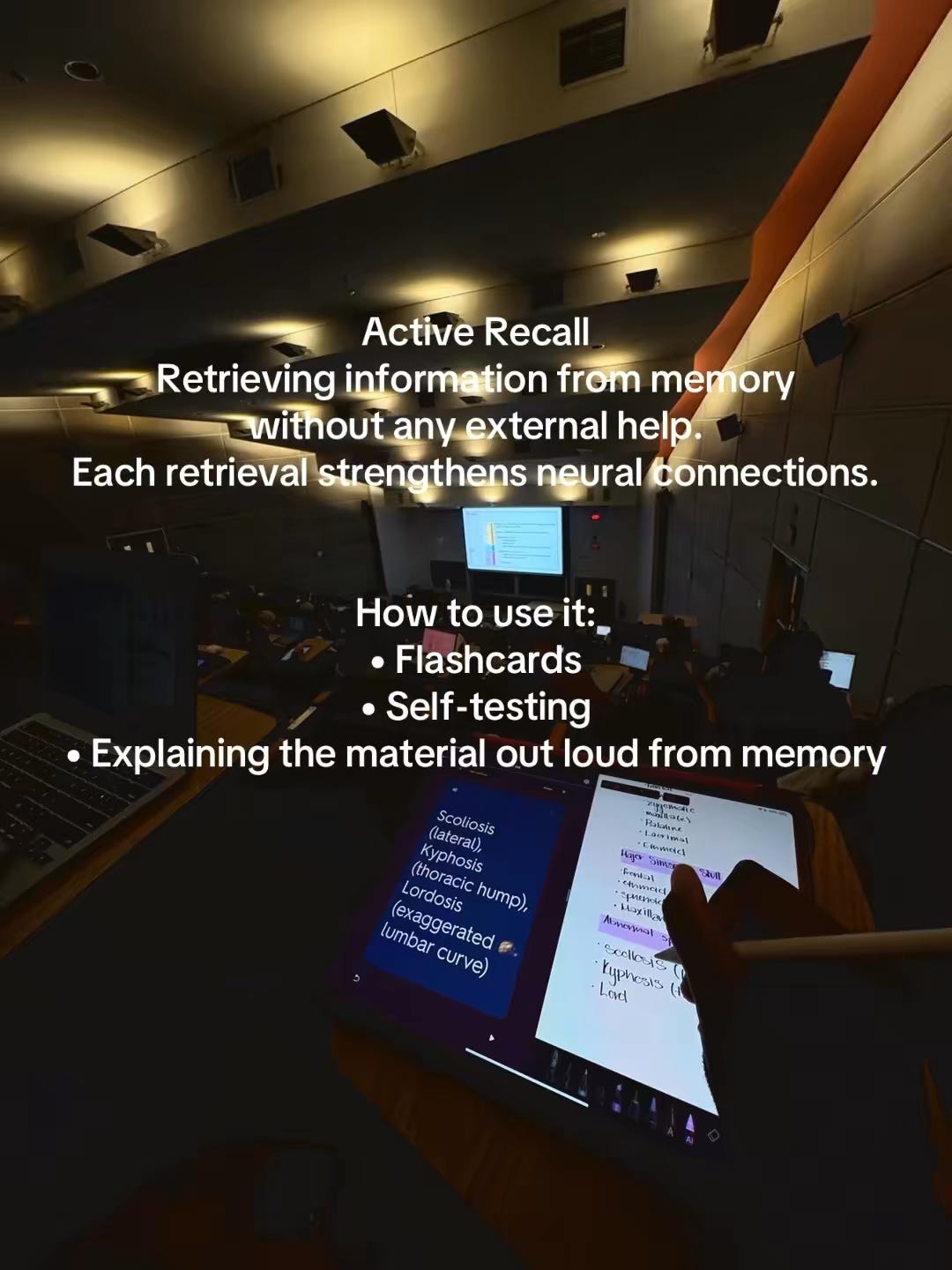
Active recall means pulling information out of your memory without looking at any notes or textbooks. Every time you do this, you're literally strengthening the neural pathways in your brain. Think of it like a hiking trail — the more you walk it, the clearer and easier the path becomes.
How to actually use it:
- Flashcards (old-school paper or digital — both work great)
- Self-testing — close the book and quiz yourself before you ever look at a practice test
- Explain it out loud from memory — pretend you're teaching it to someone who's never heard of the topic
That last one? It's a game-changer. I'll say more about it below.
2. 📅 Spaced Repetition — How to Actually Remember What You Learn
Pop quiz: How much of what you studied last week do you still remember right now?
If you're like most people, the answer is… not a whole lot. That's because of something called the forgetting curve — a concept discovered by psychologist Hermann Ebbinghaus way back in the 1880s. Without reinforcement, we forget roughly 70% of new information within 24 hours.
Seventy percent. Gone. Just like that.
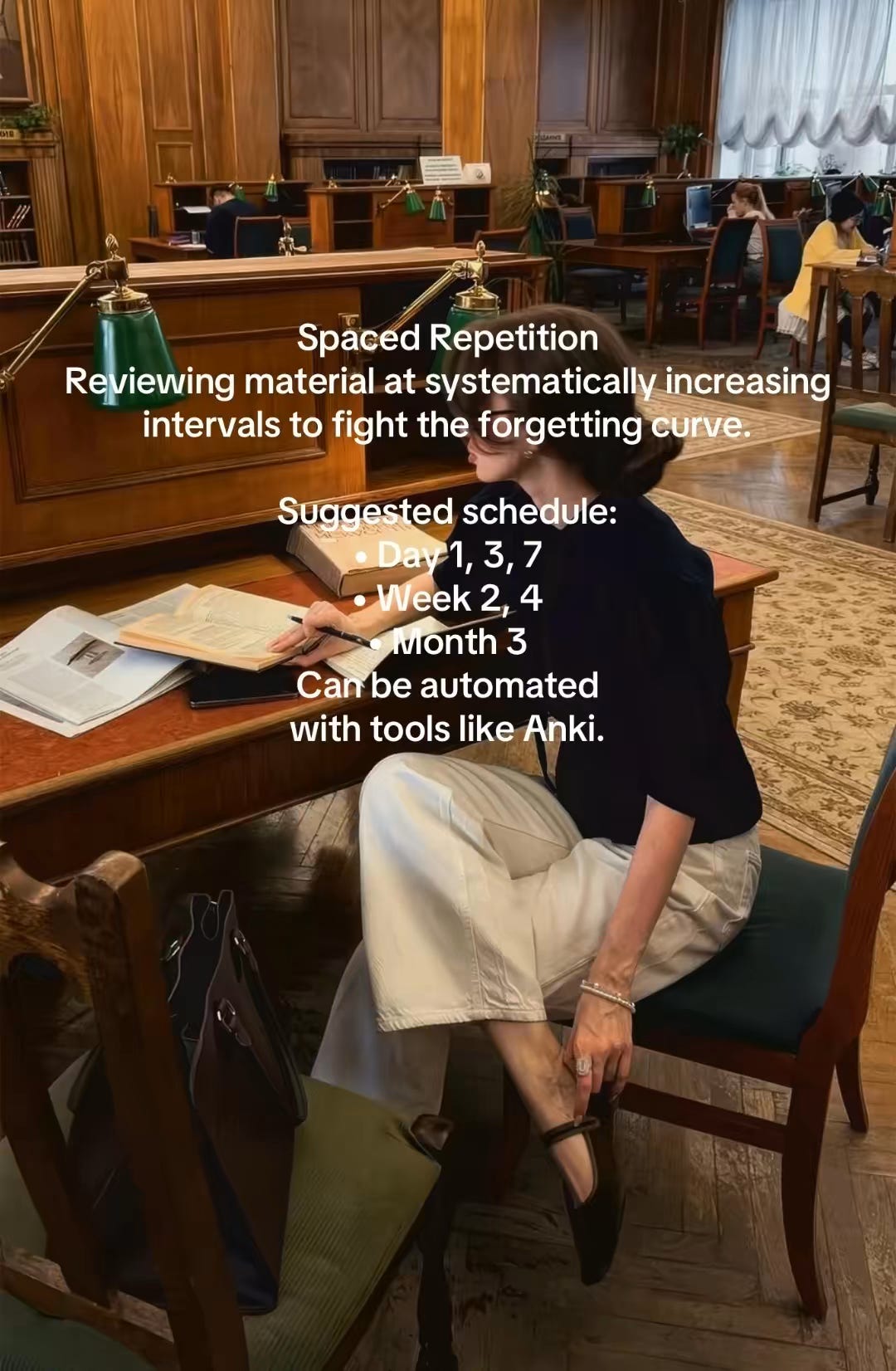
Spaced repetition is the antidote. Instead of cramming everything the night before (we've all been there 😅), you review material at strategically increasing intervals:
An optimal review schedule looks like this: first, revisit the material the same day you learn it. Then review it again on Day 3 and Day 7. After that, come back to it in two weeks, then one month later, and once more around the three-month mark. This rhythm helps move information from short-term memory into long-term storage and significantly reduces the forgetting curve.
This is how long-term memory is built. Not through marathon study sessions, but through short, intentional reviews spread out over time.
🛠️ Pro tip: Use a free app like Anki to automate the whole schedule. It uses an algorithm to show you cards right before you're about to forget them. It's like having a personal trainer for your brain.
3. 🪞 Metacognition — The Superpower of Thinking About Your Thinking
Okay, this one sounds a little "woo-woo" at first, but stay with me — because metacognition is arguably the most powerful skill on this entire list.
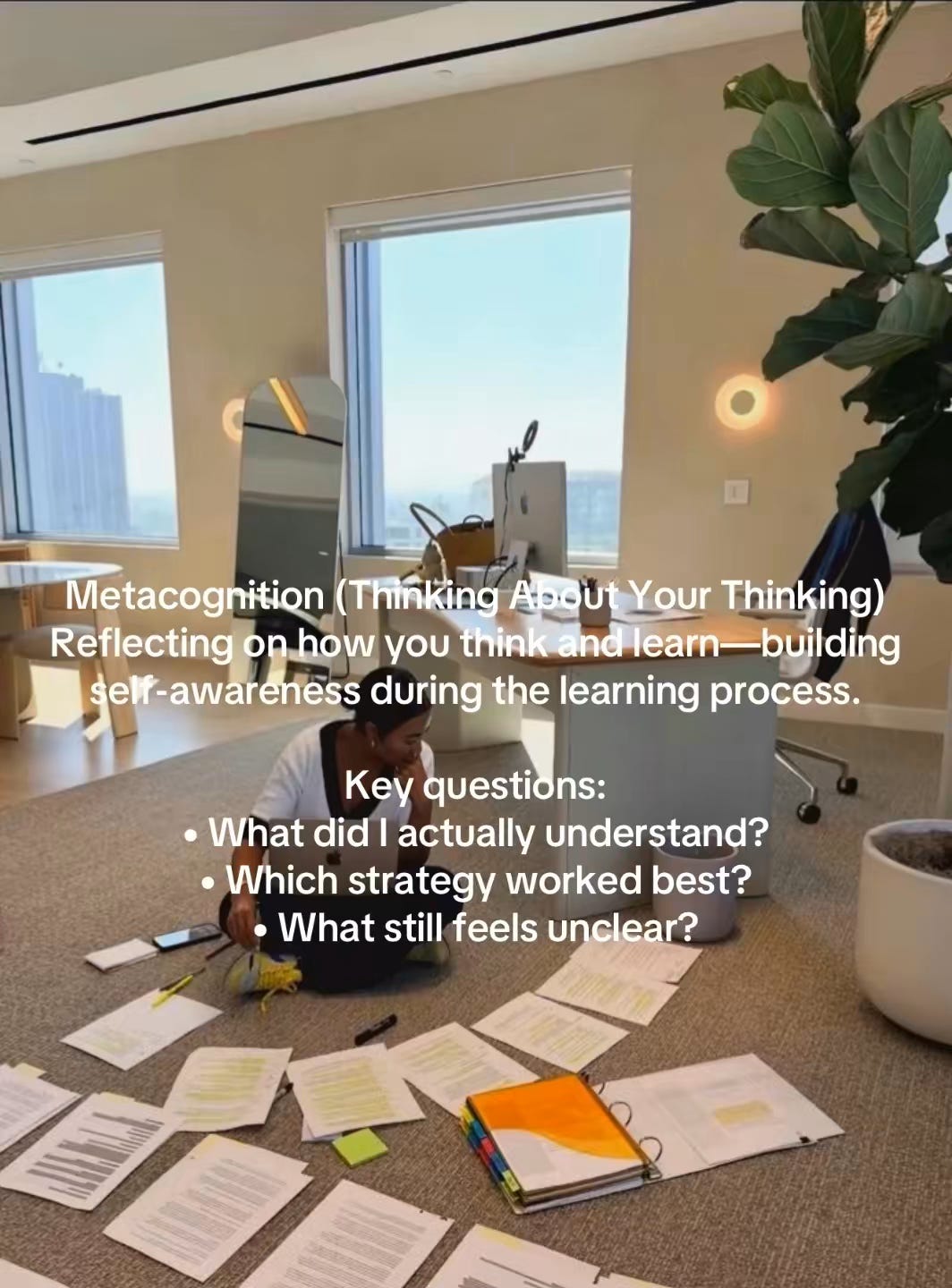
Metacognition simply means being aware of how you think and learn. It's the difference between a student who just plows through material and a student who pauses and asks:
- "Wait — did I actually understand that, or did I just read the words?"
- "Which study strategy worked best for me this week?"
- "What specifically still feels unclear?"
Top students are constantly self-monitoring. They don't just study harder; they study with intention. They notice when they're confused and adjust their approach in real time instead of pushing through blindly.
How to build this habit:
Encourage your kids (or yourself!) to do a quick 2-minute reflection after every study session:
1. What did I learn today? (Summarize it in your own words.)
2. What's still fuzzy? (Be honest — this is where the real learning happens.)
3. What will I do differently next time?
It's such a simple practice, but the results are profound. Research from Stanford consistently shows that students who practice metacognition outperform their peers — even peers with higher test scores at baseline.
4. 📂 The Case Study Method — Learning Like a Harvard MBA Student
If you've ever heard of Harvard Business School, you've probably heard of the case study method. It's been a cornerstone of their teaching for over a hundred years — and there's a really good reason for that.
Instead of memorizing facts, students are given complex, real-world scenarios with no single "right" answer. They have to analyze, debate, make decisions, and defend their reasoning.
Why does this work so well?
- It forces you to apply knowledge, not just store it
- It builds critical thinking and analytical skills
- It develops soft skills like communication, teamwork, and the ability to handle ambiguity
And here's the thing — you don't have to be at Harvard to use this approach. You can apply it at any age:
- For younger kids: "You're the mayor and the town has a water shortage. What do you do? Why?"
- For high schoolers: Analyze real news stories from multiple perspectives.
- For adult learners: Apply concepts from your course to an actual problem at your workplace.
The messier the problem, the deeper the learning. That's the whole point.
5. 👥 Peer Teaching — The "Explain It to a Six-Year-Old" Rule
Here's one of my favorite learning principles, and it comes from the legendary physicist Richard Feynman:
If you can't explain something simply, you don't understand it well enough.
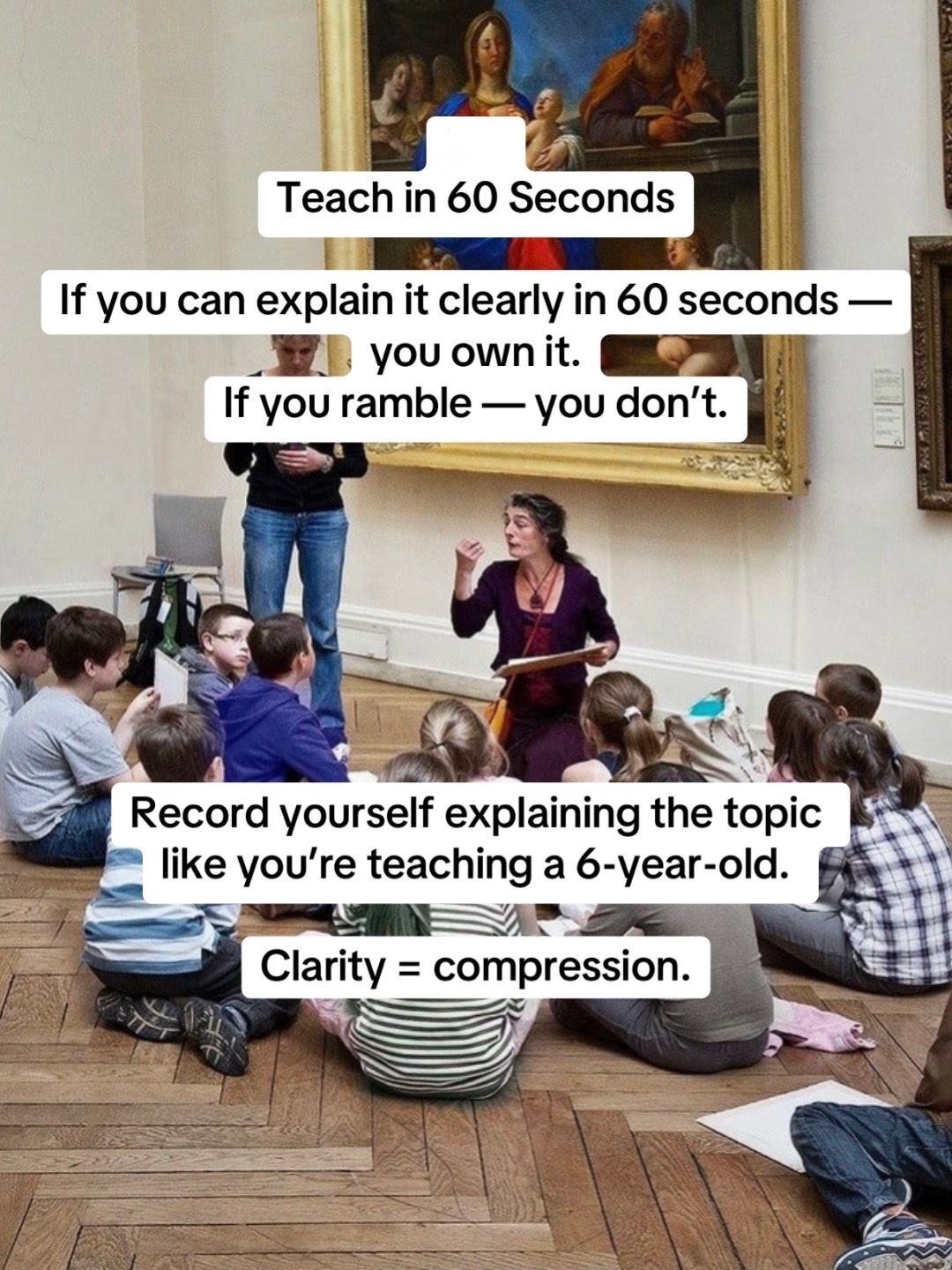
Peer teaching — the act of explaining material to someone else — is one of the most effective ways to deepen your own understanding. When you teach, you're forced to organize your thoughts, identify gaps in your knowledge, and find clear language for complex ideas.
And it's not a one-way street. Both the "teacher" and the "student" benefit.
Ways to put this into practice:
- Study groups — but make them active. Don't just sit in silence together. Take turns teaching each other sections of the material.
- Brainstorming sessions — talk through problems out loud, challenge each other's reasoning.
- The dinner table test — Can you explain what you learned today to your family at dinner in a way that everyone gets it? If not, you've found your gaps.
Parents, this is a big one for you too. When your kid comes home from school, don't just ask "How was your day?" Try asking: "Teach me one thing you learned today." You'll be amazed at what this simple shift does for their retention — and your relationship.
6. ❓ Socratic Questioning — The Ancient Method That Still Outperforms Everything
Socrates was onto something 2,400 years ago, and modern neuroscience has proven him right.
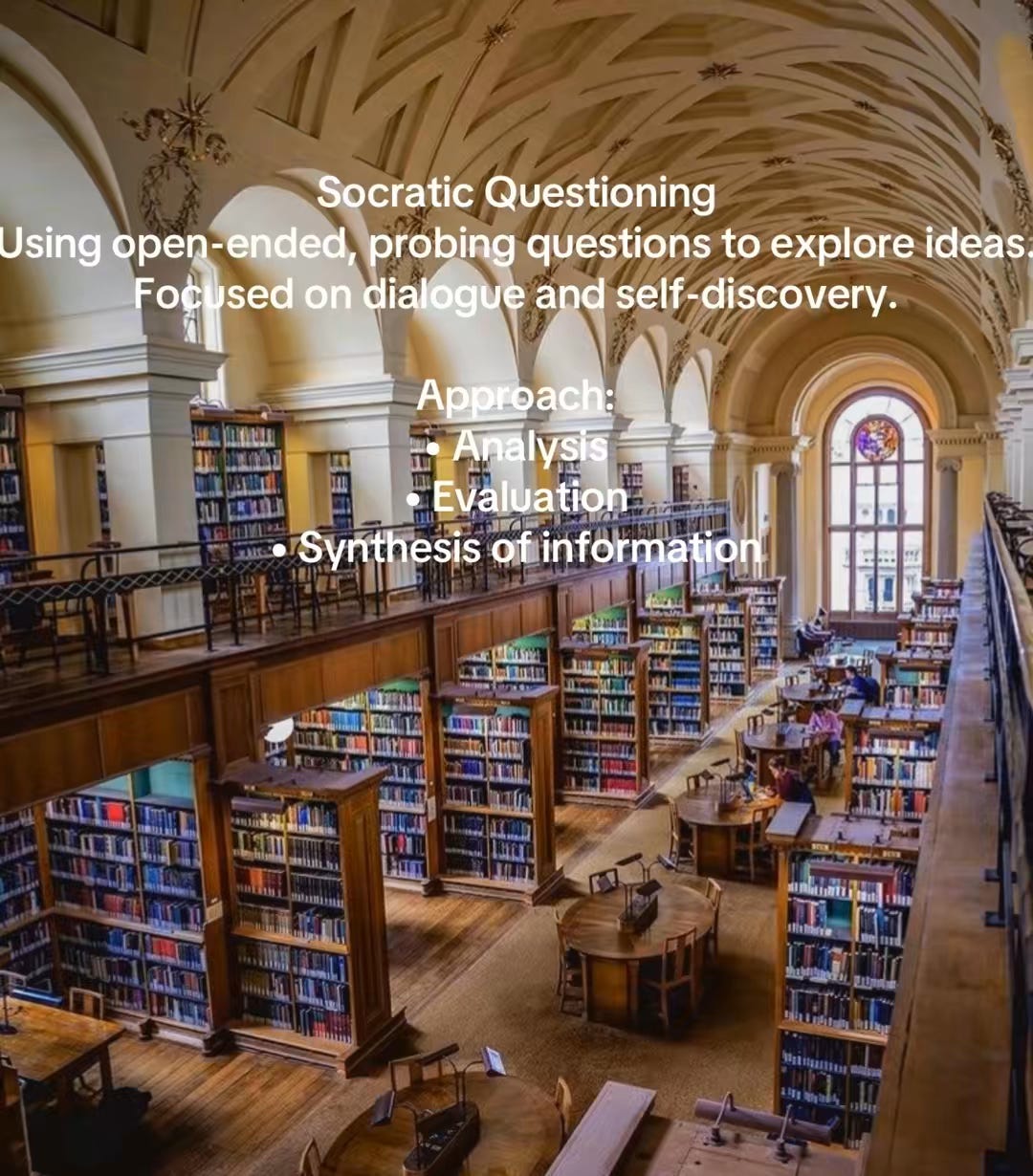
Socratic questioning isn't about giving answers. It's about asking the right questions — open-ended, probing questions that push you to think deeper, challenge assumptions, and arrive at understanding through your own reasoning.
Instead of: "The answer is X."
Try: "What makes you think that? What if the opposite were true? How would you know?"
The three pillars of Socratic inquiry:
1. Analysis — Break the idea down. What are its parts?
2. Evaluation — Assess it. Is this reasoning sound? What's the evidence?
3. Synthesis — Put it together. How does this connect to what you already know?
This is how deep understanding is built. Not by memorizing conclusions, but by learning how to think your way to them.
For parents and educators: Try replacing statements with questions. Instead of correcting a wrong answer, ask, "Interesting — how did you arrive at that?" You'll be guiding them toward the right answer and teaching them how to reason independently. That's a two-for-one deal you can't beat.
So What's the Real Takeaway?
Let me bring it all home:
The gap between top students and average students is not an IQ gap. It's a strategy gap.
The most successful learners at Harvard, Stanford, MIT — and honestly, anywhere — aren't working with fundamentally different brains. They're working with fundamentally different habits.
And those habits? They're learnable. By anyone. At any age.
🎯 Your Challenge This Week
Don't try to overhaul your entire learning system overnight. That's a recipe for burnout and exactly zero follow-through.
Instead, pick just ONE technique from this list and commit to using it for the next seven days:
- Try active recall instead of re-reading your notes
- Set up spaced repetition with Anki for one subject
- Add a 2-minute metacognitive reflection after each study session
- Ask your kid to teach you what they learned today
- Replace one statement with a Socratic question this week
Small changes, consistently applied, lead to extraordinary results. That's not a motivational platitude — it's neuroscience.
"You don't need to be smarter. You need to learn smarter."

🎧 Coming Up Next in the Series
Make sure you subscribe so you don't miss new series. And if this resonated with you, share it with a parent, student, or lifelong learner in your life who could use a smarter approach to learning. Let's build a community of people who learn — and help each other learn — better. 🚀
Got a question? A technique that's worked for you? Drop it in the comments — I read every single one and I'd love to hear your story.